

Reawakening a Landmark: Breathing New Life into Mendelsohn’s Modernist Masterpiece
It was time. The year was 1942 and community members were migrating in masse to the eastern suburbs of Cleveland. To fulfill a need, a new synagogue was envisioned, and a campaign launched. Eric Mendelsohn, a German-British architect, known for his expressionist architecture in the 1920s won the synagogue building committees approval with ideas sketched on a blackboard. Completed in 1950, the Park Synagogue located in Cleveland Heights, Ohio, weaves a long and colorful history, but for the sake of the next chapter we’ll fast forward 75 years to present day.
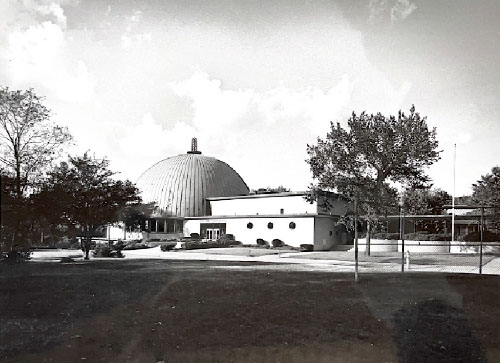
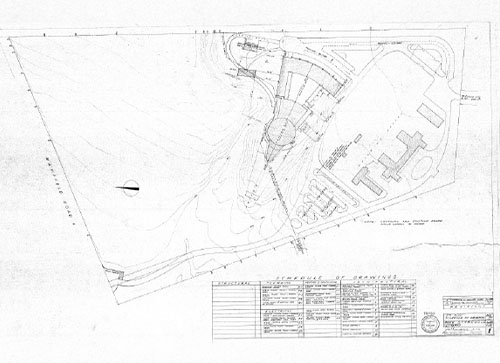
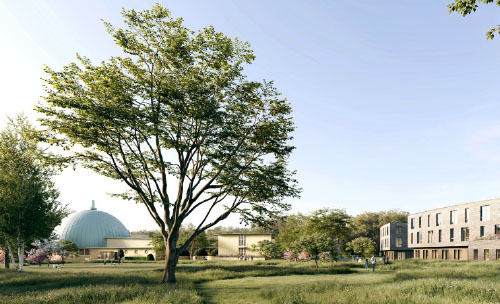
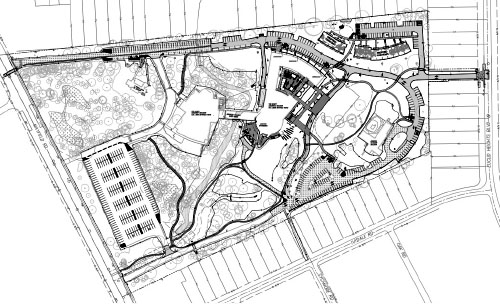
It’s time again. Time to reawaken the landmark. Although the blackboard is no longer our medium, its spirit lives on as ideas move into Adobe Creative Suite, Civil 3D, SketchUp, Revit, and other digital platforms. The result will be the inspired Park Arts Campus.
How do you adapt a building and its site for a new purpose without losing the history that has defined it for so many years? It starts with a vision (Friends of Mendelsohn/ Sustainable Community Associates), a design team (lead by studio BCC), a masterplan (Reed Hilderbrand), and input from a community that has cherished and used the site for so many years. Successful project delivery requires close collaboration among a wide range of design disciplines including architects, landscape architects, civil engineers, structural engineers, MEP and geothermal engineers, sustainability and environmental consultants, irrigation consultants, arborists, geotechnical engineers, surveyors, traffic engineers, and historic preservation consultants.
Environmental Design Group was proud to lead the site‑related work for the Park Arts Campus project. Rather than working in silos, our civil engineers and landscape architects focused on a shared narrative among all partners, where technical realities and creative vision came together in a seamless, thoughtful design, ensuring the original vision is never lost. Through open communication and transparency all team members along with ownership have made informed budget decisions leveraging value‑engineering options that support the bottom line while still honoring the project’s goals and continuing the legacy of the original site.
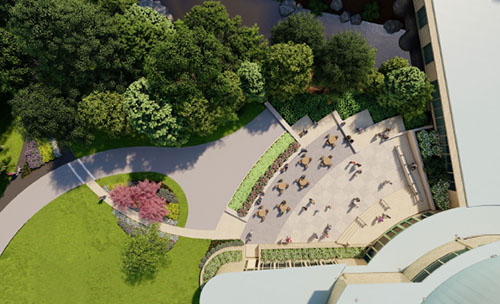
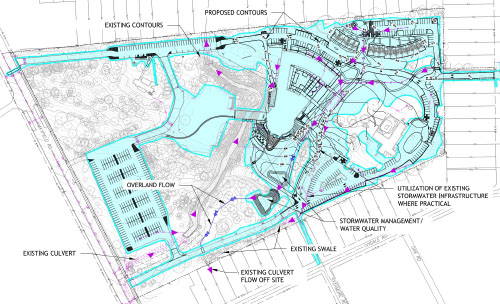
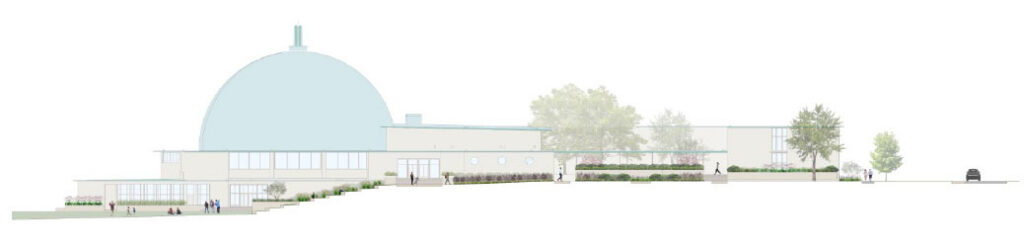
So, what does this new chapter look like for Park Synagogue and the Park Arts Campus? The building will be restored and transformed into a 75,000 sq. ft. center for arts, education, and community life, returning to its role as a gathering place while preserving the park‑like setting that generations have enjoyed. Friends of Mendelsohn/Sustainable Communities Associates will continue to steward the privately owned site, working with the city to formalize public walking paths and access so the community can remain connected to this cherished landscape. Because the parcel south of the stream is historically protected, every step, every repair, every restoration requires an approval process, ensuring the site’s legacy is honored.
The project will advance through carefully planned phases. The first phase brings essential infrastructure upgrades, the synagogue’s renovation, and 30 new housing units that have already received preliminary federal and state historic approvals. Over time, the site will remain a welcoming landscape, with new walking paths, open access, and housing that seamlessly integrates into the natural and historic character.
Park Arts Campus Fun Facts:
- For the stream enthusiast:
- Nearly 90 percent of Dugway Brook is culverted. This site contains an approximate 300-yard stretch that is visible.
- For the tree enthusiast:
- Approximately 980 trees on site have been individually inventoried by Davey Resource Group with species including Bitternut Hickory, Black Walnut, Oaks (multiple species), Maples (multiple species), Basswood, London Planetree, Beech, Sycamores, Hawthorn, American Elm, Blackgum
- For the Historian:
- The site was listed on the National Register in 2024
- For the utility enthusiast (yes, we know you are out there):
- Existing records, we have those, lots of them. Do they match what is found on site, of course not. A collaborative approach to site investigation and due diligence has been essential.
- Waterlines: After 75 years, the water lines aren’t just aging – they are begging to be replaced. We have listened and a new system is proposed.
- Storm: Let’s just say the storm sewers had… character. Enough character that fieldwork turned into a full‑on scavenger hunt.
Recognizing and embracing the historical significance of existing spaces goes a long way in preserving community culture. The vision that is to become the Park Arts Campus is a testament to those who respect legacy but understand that change is needed. Through collaboration and thoughtful design this reimagined landmark will serve a new generation of people for decades to come.
Learn more about the history and future of the Park Synagogue
To learn more about the site development services of Environmental Design Group, visit Site Development.