

ODNR Dam Safety: What Reclassification Means for Dam Owners
Many dam owners in Ohio are hearing more about dam classification, spillway capacity, and compliance. In simple terms, ODNR’s Dam Safety Program regulates dams based on how serious the consequences would be if a dam were to fail, making dam safety a central focus for owners across the state.
A dam’s class is based partly on its size, but also on what lies downstream. Homes, businesses, roads, utilities, or public facilities could be damaged if water were to be suddenly released during a dam failure. ODNR can assign a classification during permit review or dam inspection and can reclassify a dam later if downstream conditions change or new information becomes available. Therefore, a dam does not have to physically change to face new requirements.
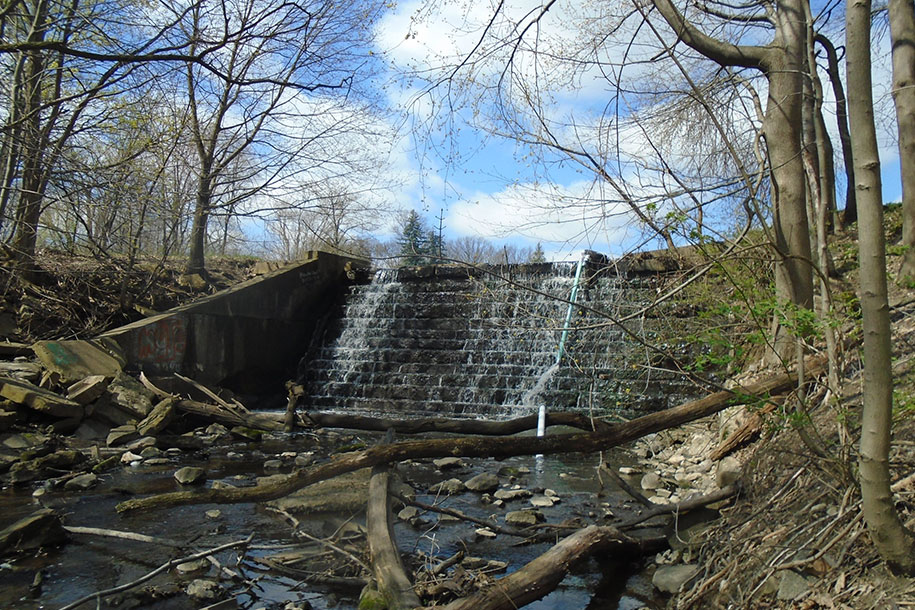
What Triggers Dam Reclassification?
For example, if new homes are built downstream, or if a road, utility, or other important facility is now at risk, ODNR may determine that the dam belongs in a higher class. In general, Class I dams are those where failure could likely cause loss of life or the destruction of a home or business. Class II and Class III dams are still important, but the expected consequences are lower. Class IV dams are generally smaller, lower-risk structures and may be exempt from permit requirements.
Spillway Capacity and PMF Requirements
A higher classification often means a dam must safely handle a larger storm, so we must look at PMF (Probable Maximum Flood). PMF represents the largest flood scenario that engineers can reasonably evaluate for dam safety purposes—the “worst case scenario storm”—in the design. Ohio’s current rules require Class I dams to be designed to handle the entire PMF or critical flood, Class II dams for 50% of the PMF or critical flood, and Class III dams for 25% of the PMF or critical flood. These requirements play a major role in determining whether dam repair or structural upgrades are needed to meet current standards.
The Role of Inundation Mapping
PMF delineation or inundation mapping refers to studying where water would go during a large storm or a dam-related emergency. In practical terms, this means identifying what roads, buildings, utilities, or properties could be affected.
That information helps determine the dam’s classification, supports emergency planning, and shows whether the current dam meets today’s standards. ODNR’s preliminary design requirements specifically call for mapping affected properties and facilities, along with hydrologic and hydraulic assumptions used in the evaluation. This type of analysis is often a key component of broader dam services provided to owners managing compliance.
When Spillway Improvements Are Needed
If a dam is found to be deficient, the solution is often a spillway modification design. A spillway is the part of the dam that safely passes excess water when the reservoir gets too high and begins to flow over the dam. If the spillway is too small, water may rise too high and flow over parts of the dam that were never meant to handle that kind of flow, which can lead to damage or even failure.
Ohio’s rules require the spillway system to safely pass the required design flood and include features that control erosion and dissipate energy. Simply put, engineering improvements are made to help the dam pass more water safely.
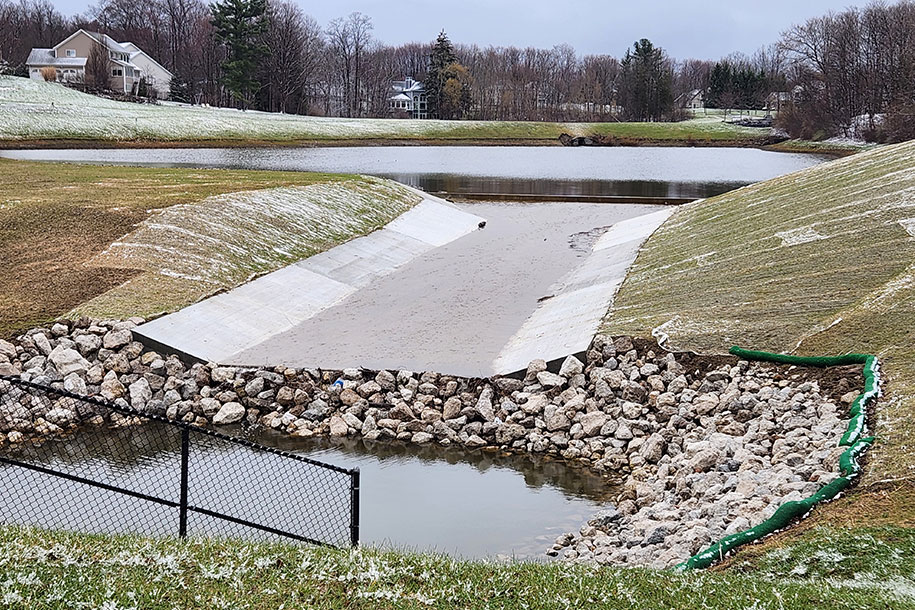
Depending on the site, this could mean:
- Enlarging the spillway
- Adding or improving an emergency spillway
- Modifying the crest
- Upgrading outlet works
- Adding erosion protection
- Making other dam safety improvements
For more significant corrective work, Ohio requires engineering documents, plans, specifications, and a design report for ODNR review, and construction is generally performed under the oversight of a registered professional engineer.
Compliance Goes Beyond Design
Owners should also know that compliance is not just about design. Ohio requires dam owners to be responsible for continued safe operation, to maintain written operation and maintenance procedures, and to maintain an Emergency Action Plan, often called an EAP.
An EAP is a step-by-step emergency document that explains who to contact, what areas could be affected, and what actions should be taken if the dam is in danger. The rules require those plans to be updated at least annually. Periodic inspections, including routine dam inspection processes, also review dam condition, available design information, hydraulic and structural performance, and the emergency plan.
Starting with the Right Evaluation
For many dam owners, the path forward begins with a clear evaluation rather than jumping straight into construction. That evaluation may include:
- Dam reclassification support
- PMF or critical-flood analysis
- Inundation mapping
- Spillway capacity review
- Concept design for needed improvements
From there, the work can advance into permit-phase engineering and final design documents for ODNR review. Ohio’s permit process is structured around a preliminary design report followed by a final design submittal, so it is important to clearly define the problem early in the process.
How Our Dam Services Help Owners Navigate ODNR Requirements
We help dam owners understand what ODNR is asking for and turn that into a practical action plan. Our dam services can include:
- Reviewing whether a dam’s current classification is still accurate
- Performing PMF and other design storm analyses
- Preparing inundation and hazard mapping
- Evaluating whether the existing spillway meets current standards
- Developing spillway modification concepts and final designs
- Preparing permit documents for ODNR review
- Supporting Emergency Action Plans and ongoing compliance efforts
See How EDG Can Support Your Dam Safety Needs
If you own or manage a dam and are unsure whether it still meets current ODNR requirements, a focused dam safety evaluation can help identify risks early, clarify the compliance path, and support cost-effective improvements before small issues become major ones.
Contact us today or explore our stormwater services to learn more about our approach.