

Finding the Money: A Municipal Guide to Funding Road Resurfacing Projects
Road resurfacing is one of the most common—and often one of the largest—recurring capital expenses for municipalities. While resurfacing projects are generally less complicated than full reconstruction, a single project can easily cost hundreds of thousands or millions of dollars. Municipalities should therefore systematically pursue outside funding before committing their own resources.
This article focuses on external funding sources—federal, state, county, regional and other agency programs—and does not include revenues that flow directly to the municipality and should already be incorporated into its operating and capital budgets.
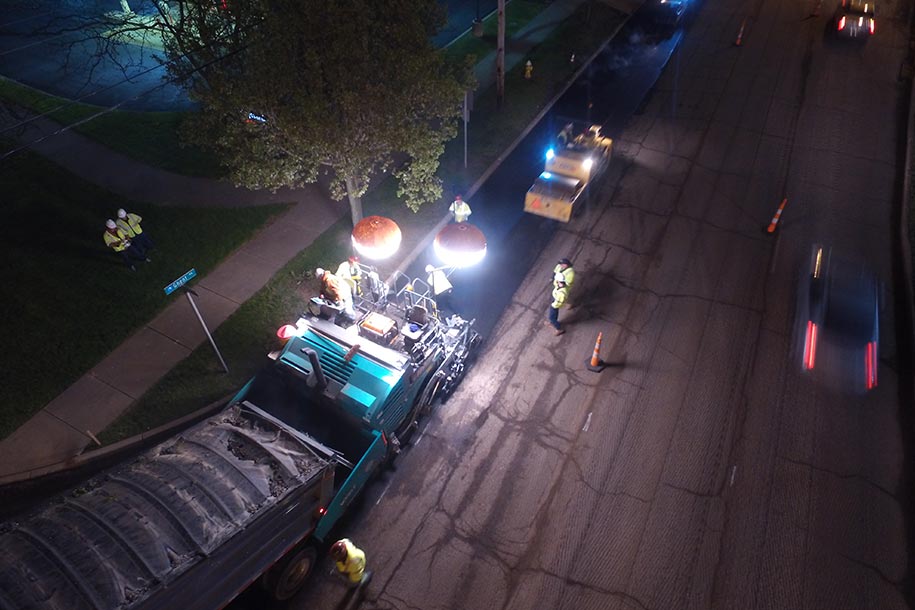
Federal Transportation Funding
Federal transportation funding should be one of the first sources evaluated. The Surface Transportation Block Grant Program (STBG) is particularly important because it can support rehabilitation and resurfacing of eligible roadways. In metropolitan areas, these funds are generally programmed through the local Metropolitan Planning Organization (MPO). Other federal programs may become relevant depending on the characteristics of the project. Safety improvements can potentially qualify for Highway Safety Improvement Program funding, while projects with qualifying congestion, emissions-reduction or transportation-system benefits may be eligible for programs such as the Carbon Reduction Program or Congestion Mitigation and Air Quality funding. The key is to evaluate the entire project—not simply label it “resurfacing”—when determining eligibility.
Ohio Public Works Commission (OPWC)
Ohio Public Works Commission (OPWC) is another major source of external funding. The Local Transportation Improvement Program (LTIP) provides competitive assistance for local transportation infrastructure, including eligible roadway rehabilitation and resurfacing. For larger or more comprehensive projects, the State Capital Improvement Program (SCIP) may provide another opportunity. Municipalities should incorporate OPWC funding into their capital planning process well before the anticipated construction year and become familiar with their OPWC district’s application schedule, scoring criteria and funding priorities.
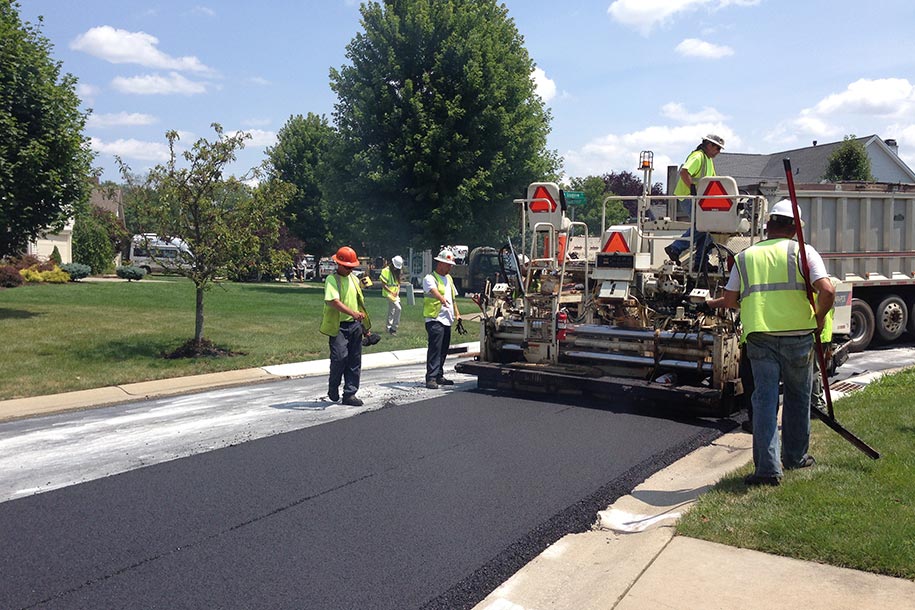
County Transportation Funding
County transportation funding should also be investigated. Ohio counties can levy permissive motor-vehicle-license taxes for transportation purposes. Under Ohio law, portions of these revenues may be used for eligible municipal streets and roads. The specific availability and allocation process varies by county.
Municipalities should establish an ongoing relationship with their county engineer and county commissioners and annually review whether county transportation revenues, cooperative projects or other county programs can participate in municipal resurfacing projects. This is particularly important because county participation may not occur automatically simply because a roadway is located within a municipality.
Finally, municipalities should screen projects for specialized and discretionary funding opportunities. Depending on location and project characteristics, potential sources may include ODOT programs, MPO discretionary programs, regional transportation agencies, economic-development organizations and federal discretionary programs such as RAISE. Safety, economic-development, congestion and multimodal components can sometimes open funding opportunities that would not be available for a basic resurfacing project.
The most effective strategy is to create a five-year external funding matrix for every significant resurfacing candidate. The matrix should identify pavement conditions, traffic volume, roadway classification, estimated cost, potential federal and state eligibility, county participation, MPO eligibility, safety or congestion benefits, required local match, application deadlines and anticipated construction year.
The goal is not simply to find a grant. It is to make external funding review a standard part of the municipal pavement-management and capital-planning process. Every major resurfacing project should be screened against available federal, state, county, regional and agency programs before municipal funds are prioritized and committed. Learn more about EDG’s economic development services.