

Road Safety: Do You Have a Problem?
When reviewing road safety there are two things to consider. First, the instances of crashes and second, what factors are causing the crashes? Let’s take a deeper look at both.
CRASHES
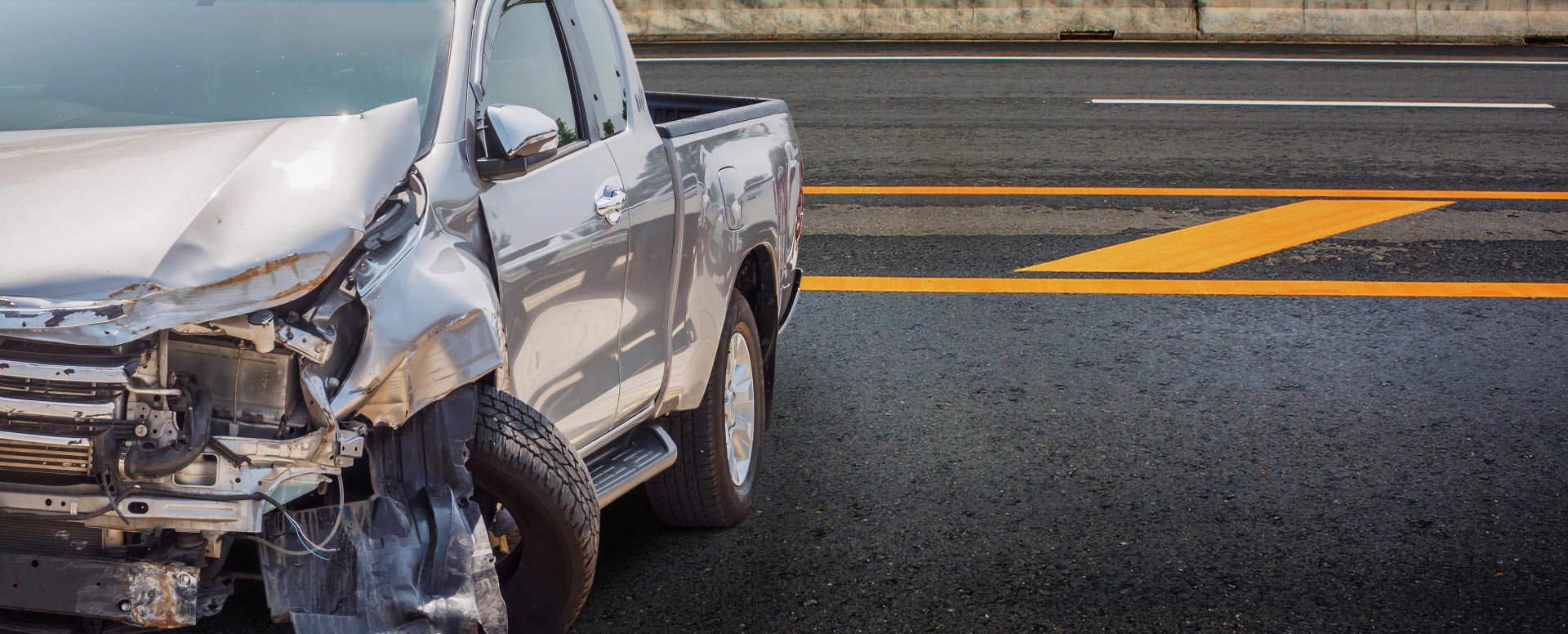
If a community has vehicle crash issues, you likely already know it. You see the aftermath, you have the crash reports, and/or you hear about the fatalities. However, the visibility of the crash problem may be minimal if there haven’t been any fatalities in a particular location but instead have resulted in severe injuries. Crashes that result in severe injuries often do not hold lasting public attention but are considered as serious as fatal crashes. You may have a location that has many injury-causing crashes – even minor injuries – yet (thankfully) without a fatality. Even this type of crash pattern indicates that you may have a safety problem. If you have a crash problem, there is a solution. Likely many solutions.
FACTORS THAT CAUSE CRASHES
Many studies have been done on lived experiences and environments that create injury-producing crashes. Some are categorized as areas with potential for roadway departure, others involve vulnerable road users (VRUs).
For example, in rural areas where roadways tend to be narrow and drivers often speed, there are certain factors that we know lead to run-off-road crashes. A small-radius curve or curves that are difficult to judge, unforgiving roadways with zero shoulders, unrecoverable ditches, and solid items in clear zones become problematic. Additionally, in areas where humans may be traveling without a motorized vehicle, there are certain factors that we know lead to crashes involving vulnerable road users.
Along with this there are the well-known crash culprits for crashes involving vulnerable road users: high speed traffic, high traffic volumes, multi-lane roadways, reasons to cross the street without safe means to do so (such as marked and/or protected crosswalks), long distances between signalized intersections or other marked means of crossing, or a lack of safe spaces for pedestrians or cyclists to travel (i.e. sidewalks, bike lanes, and multi-use paths).
In these cases, we don’t need to wait until a crash happens in order to improve the safety of the roadways to prevent run-off-road and vulnerable user crashes.
With so many intertwining factors how does a community determine if they have a safety problem and find a path towards correction? The broad answer is through a safety study where crash data can be reviewed to help understand the severity and assist in finding solutions. The good news is that there are funding applications in place to help offset the costs to design and build the recommended improvements.
FUNDING APPLICATIONS
If you have injury- and fatality-causing crashes, there are two ODOT Highway Safety Improvement Program applications that may apply.
Formal Application: Requests range from $500,000 to $6M, applicable to all stages of development, and usually require a 10% local match (which can be waived with certain items or reduced if in an area of economic distress).
- Eligibility: If a location has at least 3 crashes per year and 30% or more of the crashes cause injury, the location is eligible.
- Requirements: A formal safety study must be conducted to analyze the existing conditions and crashes and determine the best strategy to reduce crashes.
- Examples of fundable projects: Signal upgrades, turn lanes, signage and road diets, roundabouts, or R-CUTs.
- Due dates: Applications are due March 31 and August 31 but should be coordinated with the District Safety Coordinator months prior.
Abbreviated Application: Requests up to $600,000 and generally fund construction of non-complex, simple projects (although occasionally design funding can be covered based on sponsor needs). There is no local match requirement.
- Eligibility: If a location has at least 3 crashes per year (with special consideration given to high severity although this is not a requirement), the location is eligible. Also, the project must be constructed within two (2) years.
- Requirements: The proposed safety improvement to be funded should be a FHWA Proven Safety Improvement Countermeasure. As this application is intended to be quicker, projects requiring Right-of-Way are not permitted.
- Examples of fundable projects: Protected pedestrian crossings, signal backplates, edge line or center line rumble strips, access management, and other FHWA Proven Safety Improvement Countermeasures.
- Due dates: Applications are due March 31, June 30, September 30, and December 31, but should be coordinated with the District Safety Coordinator six weeks prior.
If you have factors that cause crashes, specifically roadway departures or pedestrian crashes, ODOT has an application for systemic improvements.
Systemic Application: Requests up to $5M for roadway departures or up to $2M for pedestrian safety, applicable to all stages of development, and usually require a 10% local match (which can be waived or reduced if certain financial distress criteria are met).
- Eligibility: If a roadway is an arterial or collector and is critical, high, or medium priority (based on ODOT priority maps and matrices), the location is eligible.
- Requirements: Proposed countermeasures must address roadway departures or pedestrian safety.
- Examples of fundable projects: Traffic calming, wider shoulders for bikes or buggies, increasing pavement width for edge line and centerline rumble strips, removing fixed objects from the clear zone, modifying ditches, signage and pavement markings, road diets, sidewalk improvements, pedestrian crossings, pedestrian signal appurtenances, and lighting.
- Due dates: Applications are due March 31 and August 31, but should be coordinated with the District Safety Coordinator months prior.
Whatever your safety problem is, there is a funding source to help you solve it. Give us a call and let us help you make your roads safer! For more information on our Transportation Services visit: Transportation.